
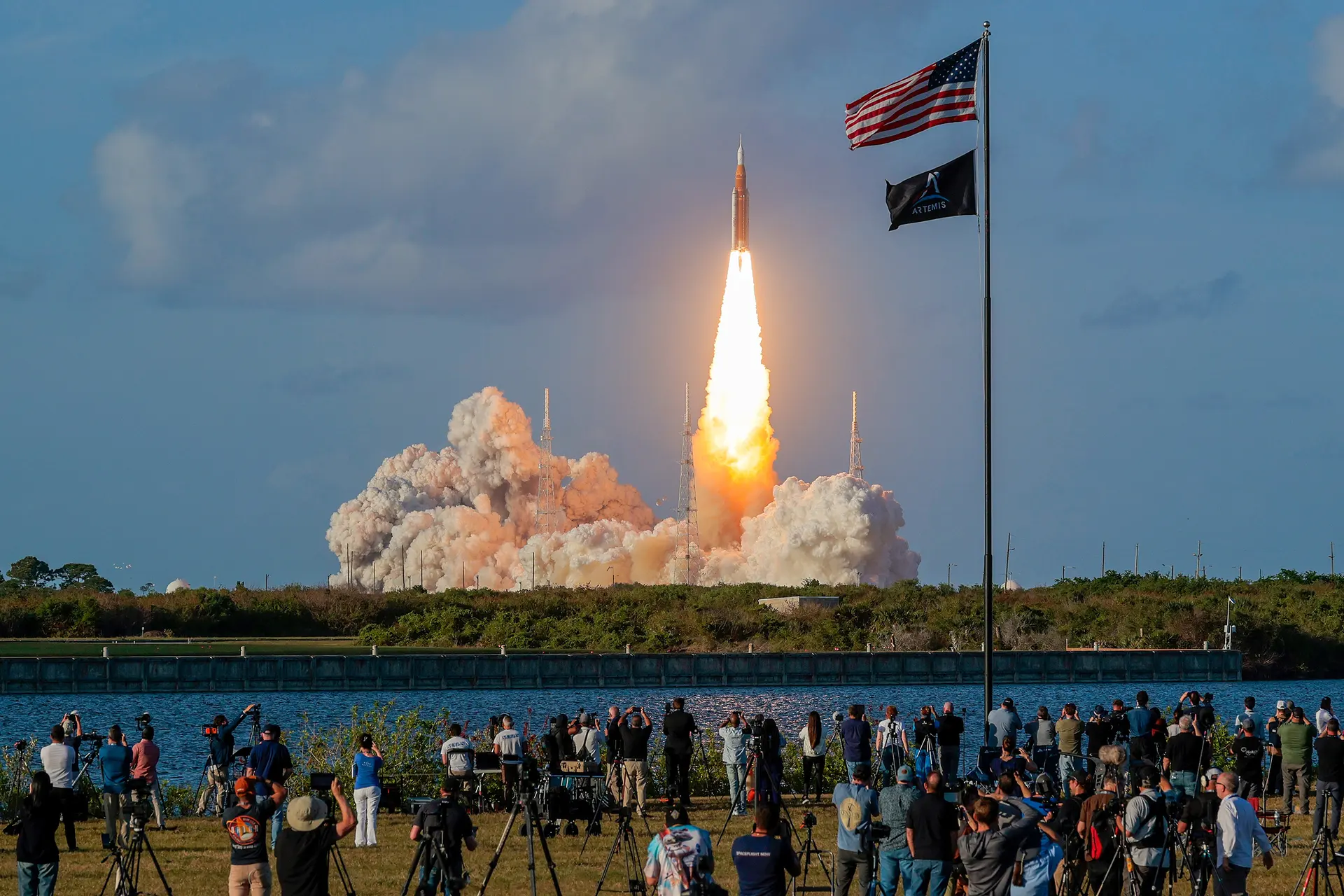
The decades-long wait is officially over. On April 2, 2026, the silence at Kennedy Space Center’s Launch Pad 39B was finally shattered as NASA’s Space Launch System (SLS) roared to life. Following a grueling season of technical hurdles, weather delays, and a frustrating rollback to the Vehicle Assembly Building, the Artemis II mission is successfully underway.
The decades-long wait is officially over. On April 2, 2026, the silence at Kennedy Space Center’s Launch Pad 39B was finally shattered as NASA’s Space Launch System (SLS) roared to life. Following a grueling season of technical hurdles, weather delays, and a frustrating rollback to the Vehicle Assembly Building, the Artemis II mission is successfully underway.
Aboard the Orion spacecraft, dubbed "Integrity" by its crew, four astronauts are currently ascending into history. Commander Reid Wiseman, Pilot Victor Glover, and Mission Specialists Christina Koch and Jeremy Hansen are now the first humans to venture beyond Low-Earth Orbit since the conclusion of the Apollo program in 1972.
Here is a look at how NASA overcame recent setbacks, a breakdown of what the crew will do over the next ten days, and how this mission fits into the agency's radically reshaped lunar strategy.
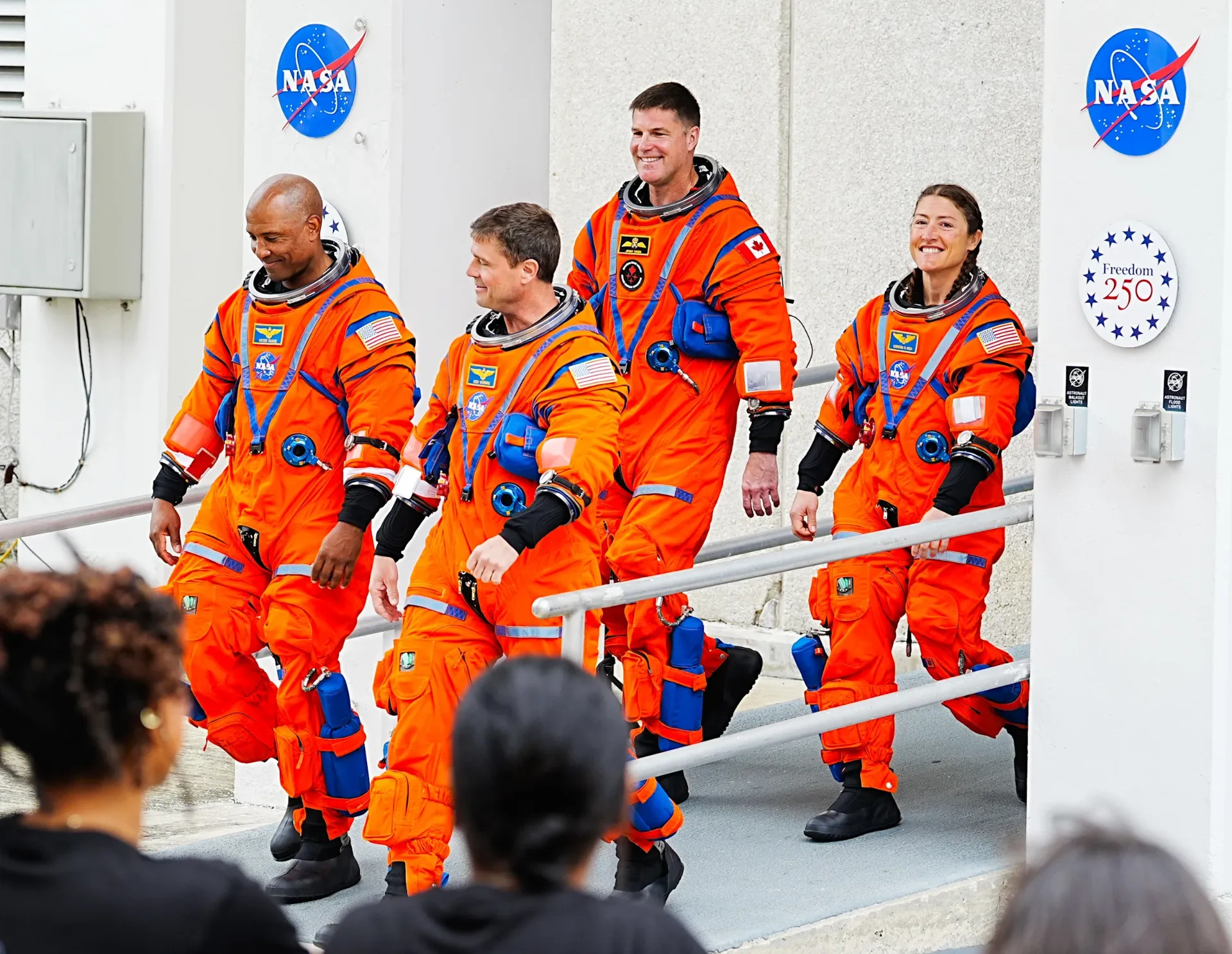
Artemis II Crew: Christina Koch, Victor Glover, Reid Wiseman, Jeremy Hansen
Overcoming the Helium Hurdle
Today’s spectacular launch is a massive vindication for NASA’s ground teams. Just over a month ago, the entire mission was in jeopardy. During late February preparations, engineers detected an interrupted flow of helium to the rocket's Interim Cryogenic Propulsion Stage (ICPS). Because helium is critical for maintaining pressure in the upper stage, NASA was forced to abort the March launch window and roll the 322-foot rocket back to the Vehicle Assembly Building (VAB).
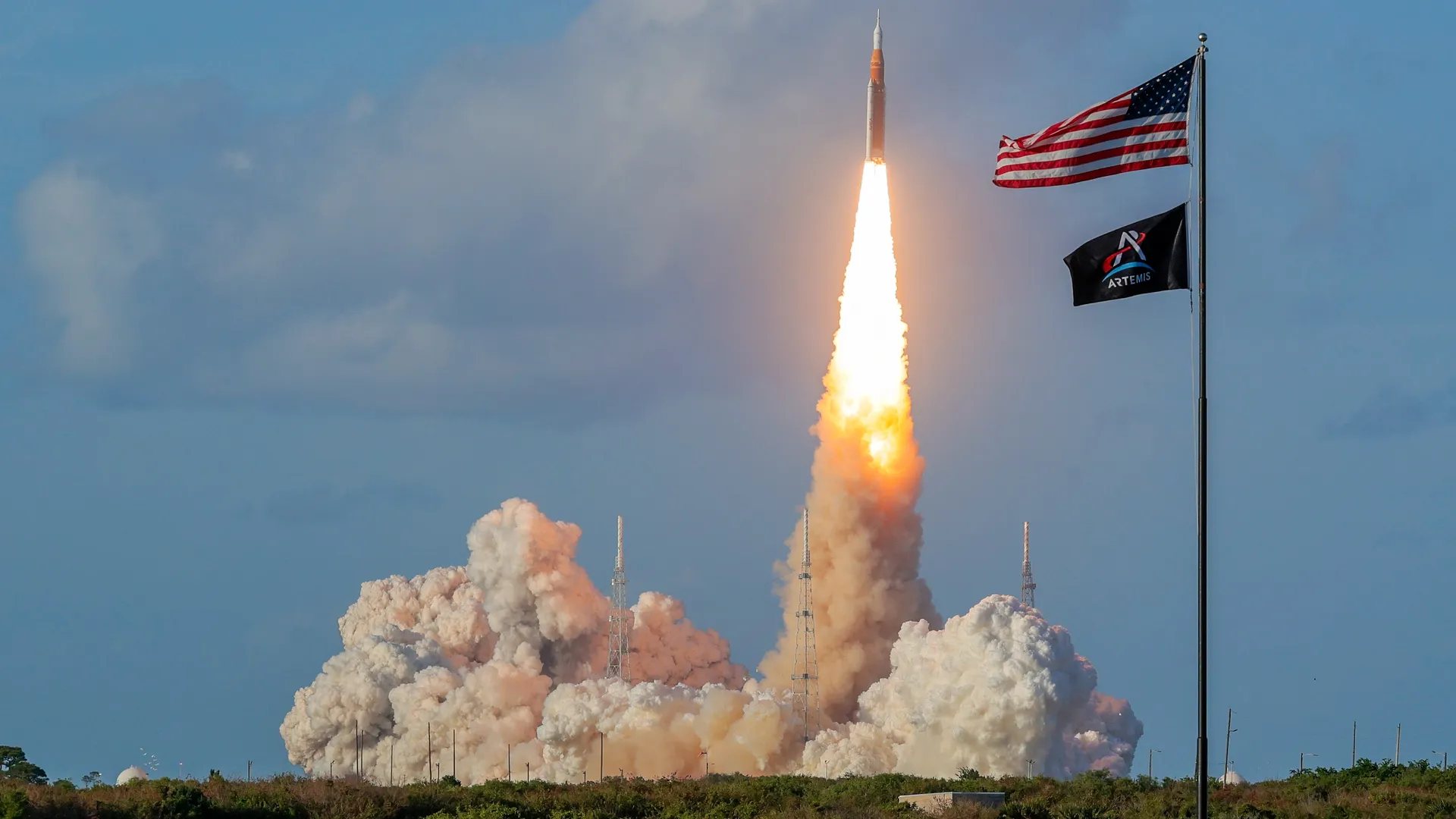
The turnaround was nothing short of remarkable. Crews worked around the clock throughout March to replace the faulty helium valves and update the flight termination system batteries. Their meticulous work paid off this morning when the countdown reached zero and the SLS rocket’s four RS-25 engines and twin solid rocket boosters ignited, producing a staggering 8.8 million pounds of thrust.
NASA Administrator Jared Isaacman praised the resilience of the teams in a post-launch briefing. He noted that the agency's commitment to fixing the problem correctly, rather than rushing to meet a calendar deadline, is exactly what allowed today's launch to proceed so smoothly.
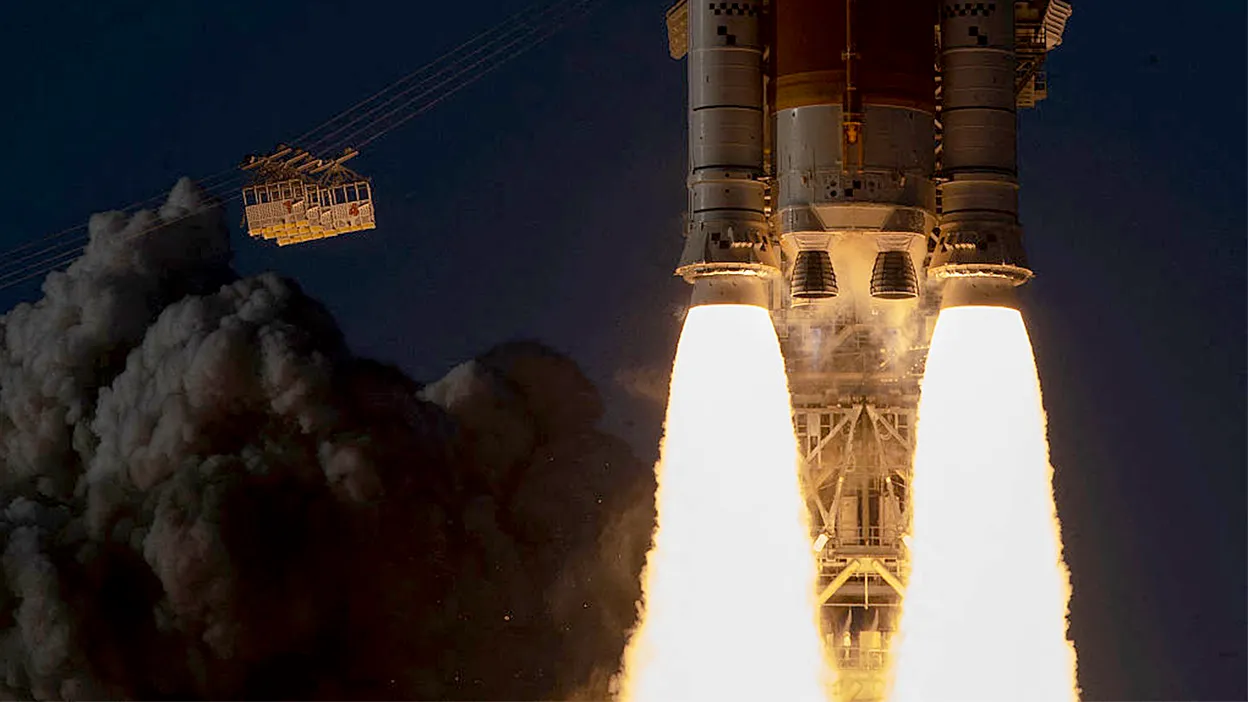
Jim Watson/AFP via Getty Images
The Mission: A Breakdown of Artemis II
While the launch was visually stunning, the most critical engineering tests are just beginning. Unlike the Apollo missions that plotted a direct course for the Moon, Artemis II is taking a much more cautious, methodical approach to deep space travel. The 10-day flight is divided into several distinct phases:
- Phase 1: Orbital Insertion and "Target Practice" (Day 1): Approximately 40 minutes after liftoff, the ICPS upper stage performed a successful perigee raise maneuver. Once Orion separates from this spent rocket stage, Pilot Victor Glover will switch the spacecraft to manual control. Instead of flying away, he will use the discarded stage as a target, practicing the delicate rendezvous and docking maneuvers required for future missions.
- Phase 2: The 42-Hour Checkout (Days 1 to 2): Following the manual flight test, the crew will settle into a highly elliptical Earth orbit, reaching an altitude of 2,600 kilometers. This two-day "test drive" allows the astronauts to rigorously evaluate Orion’s life support systems, exercise equipment, and radiation monitors while they are still close enough to Earth to abort the mission safely.
- Phase 3: Translunar Injection (Day 2): If mission control gives the green light, the crew will initiate the Trans-Lunar Injection (TLI) burn. This final major engine firing will break Orion out of Earth's gravity and send the crew on a four-day outbound transit.
- Phase 4: The Deep Space Flyby (Days 3 to 6): The spacecraft will fly on a "hybrid free-return trajectory." Orion will not enter lunar orbit but will use the Moon's gravity to slingshot around the far side. They will reach a staggering distance of 8,889 kilometers (5,523 miles) beyond the lunar surface, setting a new record for the furthest distance humans have ever traveled into space.
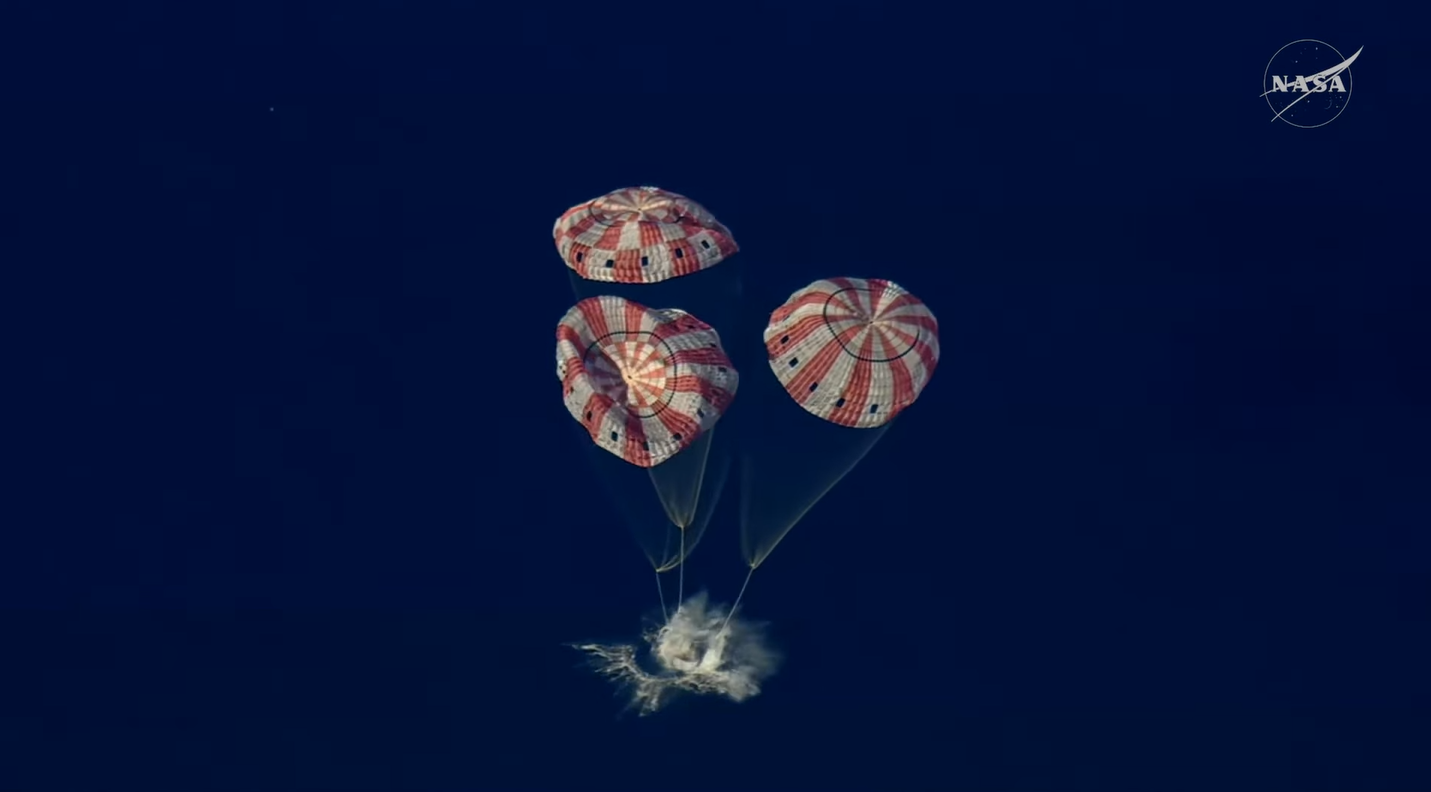
- Phase 5: Return and Splashdown (Days 7 to 10): The free-return trajectory naturally pulls the spacecraft back to Earth. The mission concludes with a fiery reentry through the atmosphere at 40,000 kilometers per hour, followed by a parachute-assisted splashdown and Navy recovery in the Pacific Ocean.
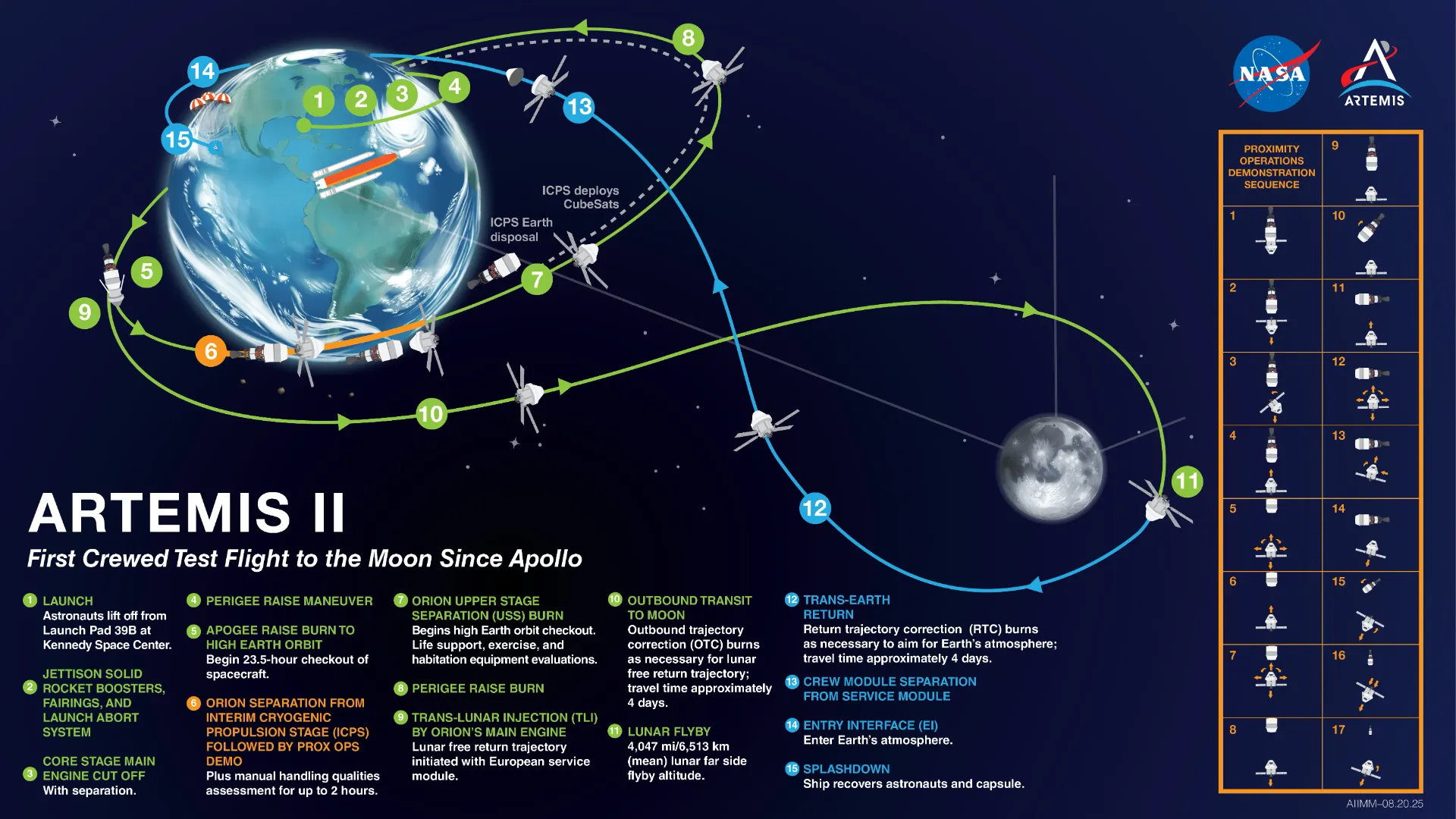
Artemis II Mission Outline (NASA)
The Broader Pivot: Bypassing Gateway for a Lunar Base
Today's launch is not just a triumph of engineering; it is the critical first step in NASA's newly accelerated and aggressively refocused lunar architecture. The success of Artemis II comes on the heels of a massive programmatic overhaul announced by Administrator Isaacman in late February.
Faced with severe hardware delays and growing geopolitical pressure from China's rapidly advancing lunar program, NASA has fundamentally altered its roadmap. The most significant casualty of this restructuring is the Lunar Gateway. Previously envisioned as a vital orbital space station around the Moon, the Gateway has been heavily deprioritized.
Instead, NASA is "returning to basics" and funneling its resources directly into surface operations to rapidly establish a permanent Lunar Base.
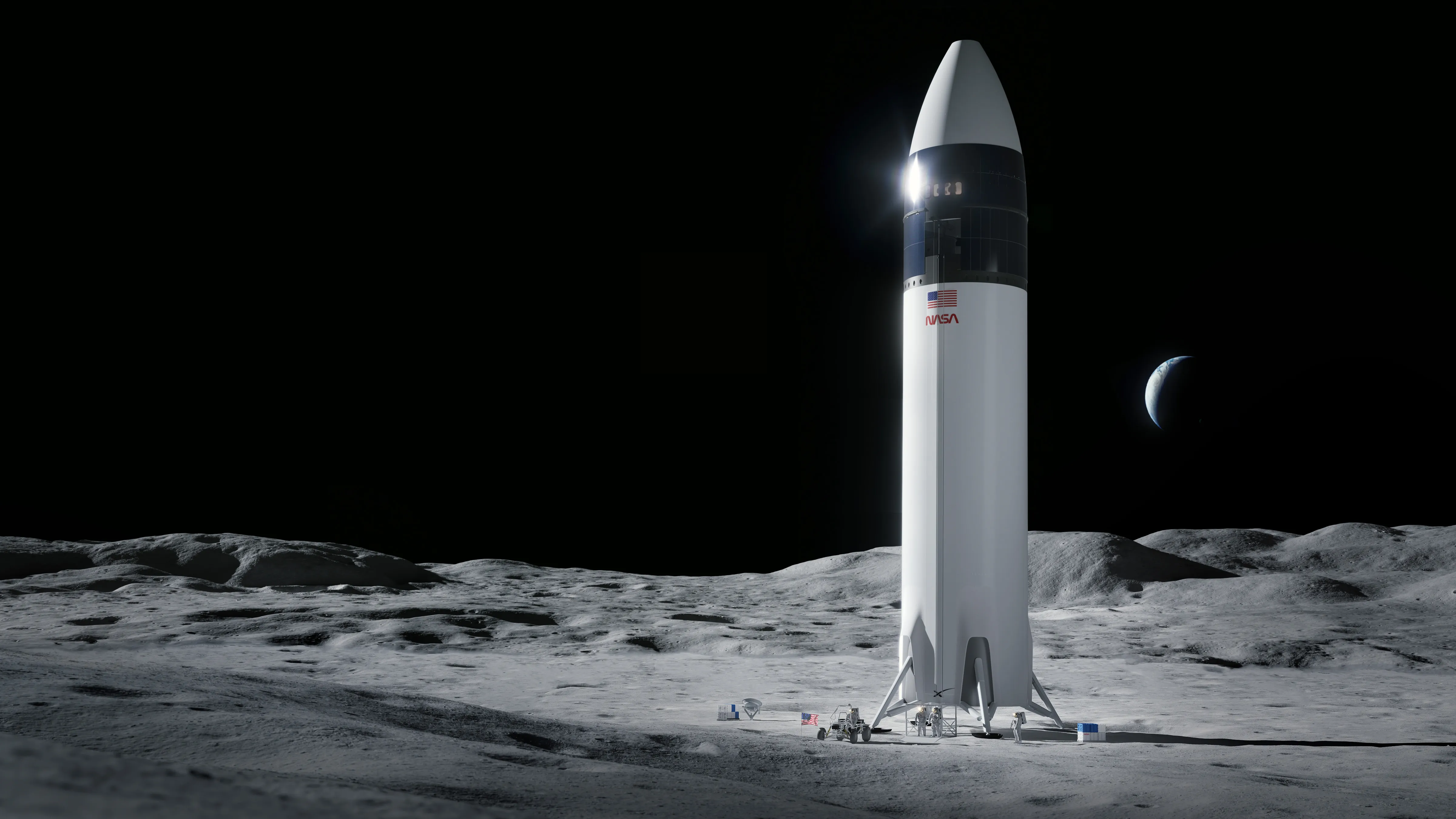
To achieve this accelerated surface presence, Artemis III will no longer feature a lunar landing. It has been repurposed as a Low-Earth Orbit test flight for commercial landers like SpaceX's Starship. By testing these massive landers in Earth orbit first, NASA aims to eliminate the "too many firsts" risk that plagued the original timeline. Consequently, the first crewed lunar landing is now officially targeted for Artemis IV in early 2028. Furthermore, NASA has scrapped complex upgrades to the SLS rocket, opting to standardize the "Block 1" configuration to achieve a faster launch cadence of one mission every 10 months.
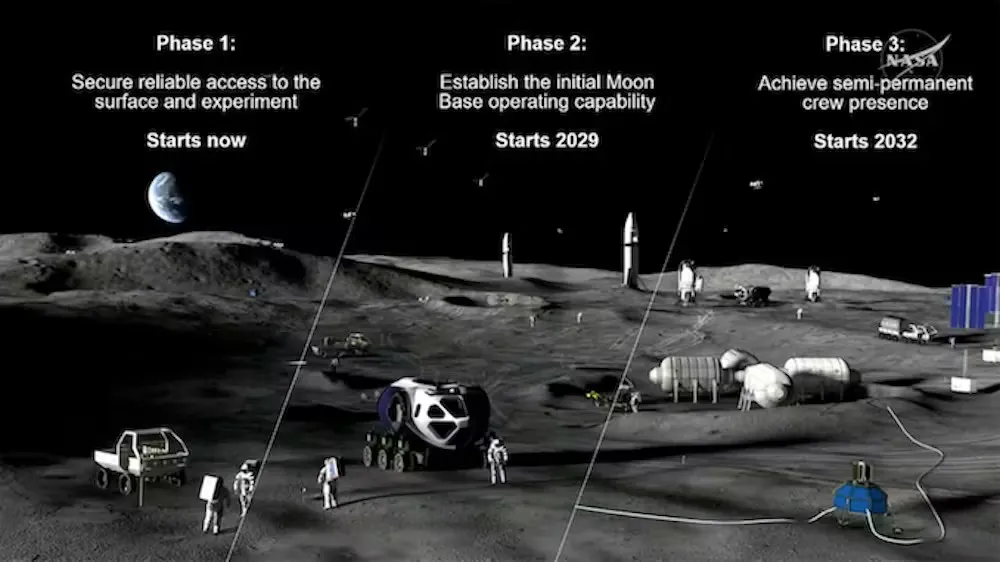
NASA’s Artemis program seeks to establish a long-term human presence on the lunar surface. NASA TV
A New Era Begins
With the Artemis II crew currently sailing through the vacuum of space, the theoretical plans of the past decade are finally being put to the ultimate test. Every system validated by Wiseman, Glover, Koch, and Hansen over the next ten days will directly inform the architecture of the upcoming lunar surface missions.
As the Orion spacecraft leaves Earth behind today, it carries the combined efforts of the American space agency, the Canadian Space Agency, and international partners around the globe. The Artemis generation has officially taken flight.