

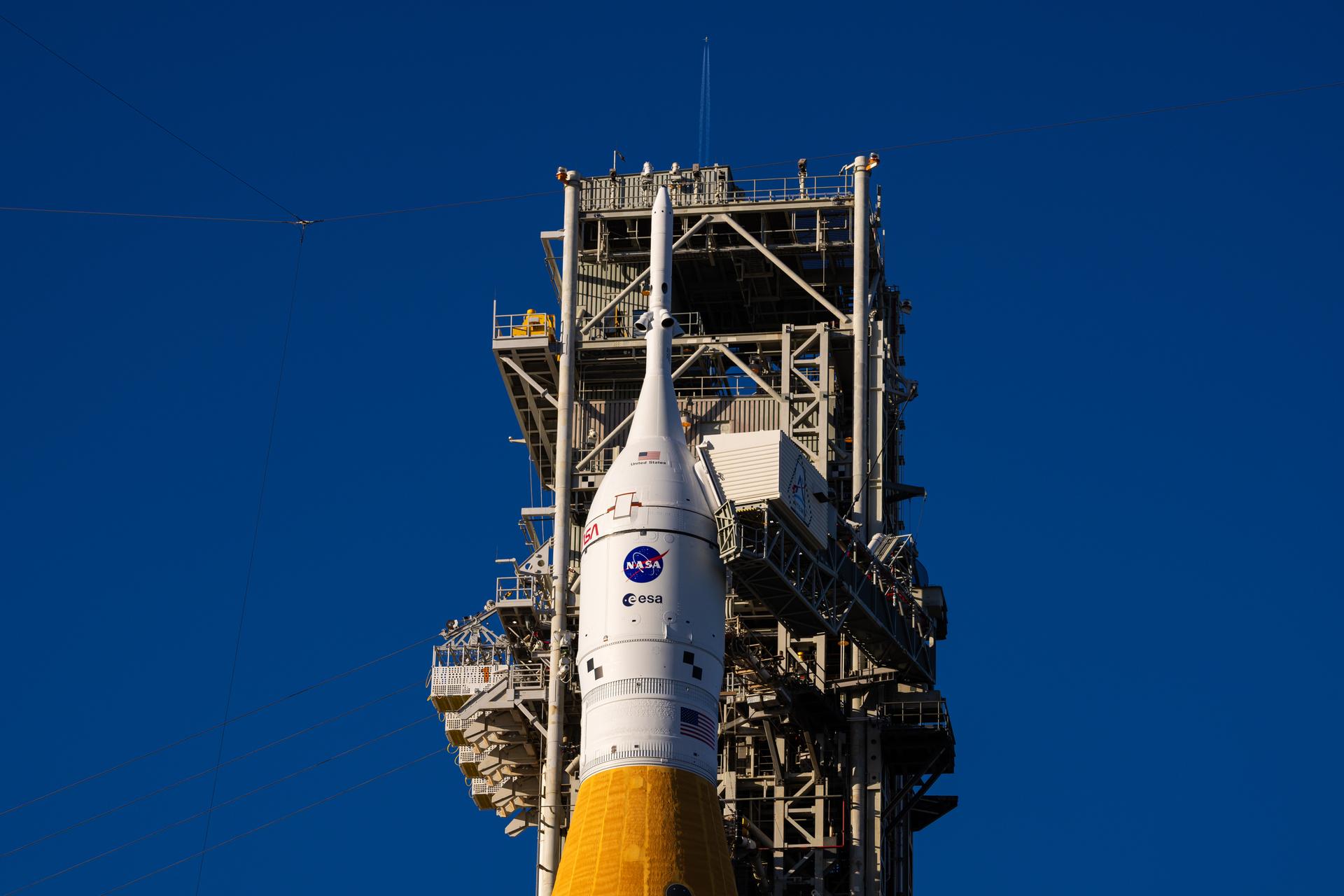
The path back to the Moon has proven to be as complex and demanding as the lunar environment itself. Following a period of significant technical and strategic evaluation, NASA has fundamentally restructured the near-term future of its human spaceflight operations.
What began as a technical delay for the historic Artemis II flyby mission has culminated in a comprehensive, program-wide overhaul announced by NASA Administrator Jared Isaacman on February 27. The primary takeaway: Artemis III will transition away from a lunar landing profile, and the Artemis II launch vehicle has returned to the Vehicle Assembly Building (VAB) for further maintenance.
Here is a detailed breakdown of the current state of NASA’s Artemis program as of March 2026, and the pragmatic assessments driving these critical decisions.
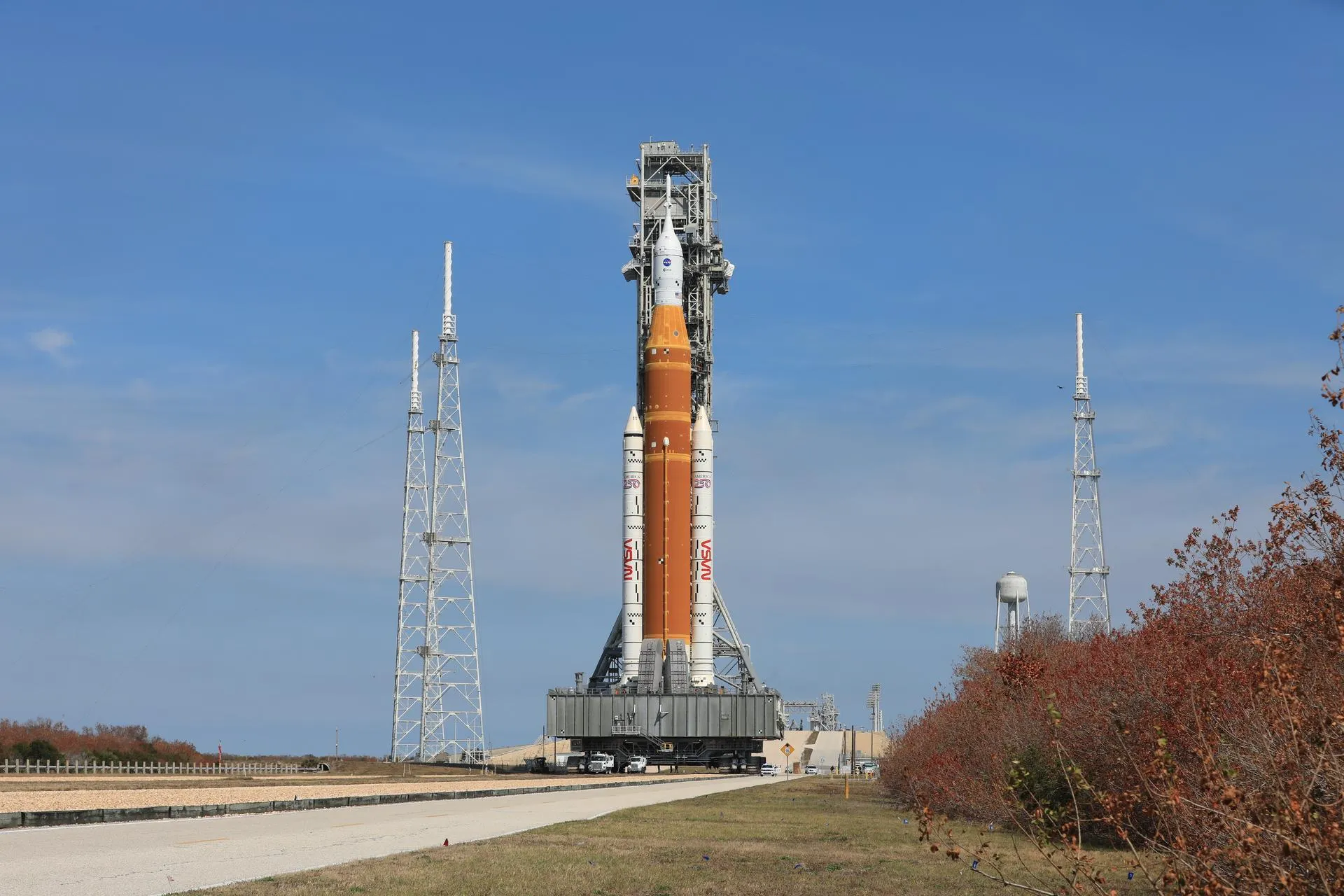
NASA’s crawler-transporter 2, carrying NASA’s Artemis II SLS (Space Launch System) rocket with the Orion spacecraft secured to mobile launcher 1, rolls back Wednesday, Feb. 25, 2026, to the Vehicle Assembly Building at NASA’s Kennedy Space Center in Florida to troubleshoot the flow of helium to the rocket’s upper stage, the interim cryogenic propulsion stage. Once complete, the SLS rocket will roll back to Launch Complex 39B to prepare to launch four astronauts around the Moon and back for the Artemis II test flight. NASA/Kim Shiflett
Artemis II Returns to the VAB
The anticipation at Launch Pad 39B has been met with a necessary pause. Earlier, NASA was forced to postpone the Artemis II launch from February to March to address a liquid hydrogen leak detected during a "wet dress rehearsal." While that issue was successfully remediated and validated during a February 19 fueling test, a new technical challenge has since emerged.
On February 21, engineers observed an interrupted flow of helium to the Space Launch System (SLS) rocket’s Interim Cryogenic Propulsion Stage (ICPS). Helium is essential for maintaining pressure within the rocket's upper stage systems.
Because ground operations cannot safely access the interior of the upper stage while the vehicle is on the launch pad, NASA leadership made the prudent decision to abort the March launch window. On February 25, the 322-foot SLS rocket and Orion spacecraft began the careful, 4-mile rollback to the Vehicle Assembly Building.
Noting the recurrence of hydrogen and helium issues across both the Artemis I and Artemis II campaigns, Administrator Isaacman was candid about the need for systemic improvements over quick fixes.
"When you are experiencing some of the same issues between launches, you probably have to take a close look at your process for remediation," he stated.
The New Target: Inside the VAB, engineering teams are actively troubleshooting the helium valve and replacing batteries in the flight termination system. NASA is currently targeting a launch date of "no earlier than April 2026."
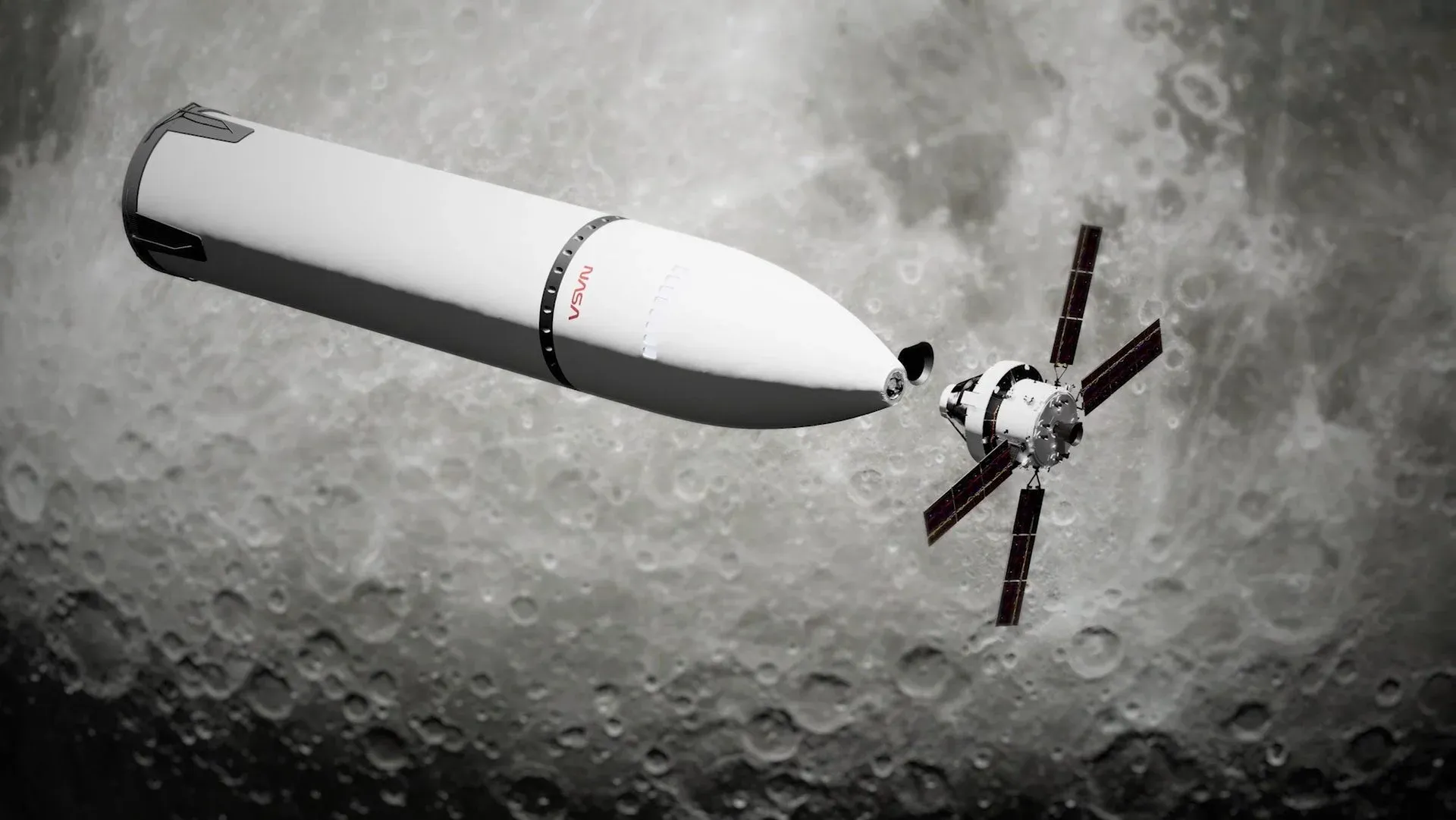
Artist's impression of an Orion spacecraft and Starship HLS rendezvousing in lunar orbit. Credit: Lockheed Martin
A Strategic Shift for Artemis III
While the Artemis II rollback is a temporary operational hurdle, the announcement made by Administrator Isaacman on February 27 represents a substantial evolution in U.S. space policy. Acknowledging that the previous timeline was overly ambitious and carried inherent risks, NASA has officially cancelled the Artemis III lunar landing profile.
Instead of attempting a landing at the lunar south pole, Artemis III, now slated for mid-2027, will be repurposed as a crewed test flight in Low-Earth Orbit (LEO). During this revamped mission, astronauts aboard the Orion spacecraft will practice critical rendezvous and docking procedures, as well as test new Extravehicular Activity (xEVA) spacesuits, with commercial lunar landers (SpaceX's Starship and/or Blue Origin's Blue Moon) within the safety of Earth's gravitational well.
"Going right to the moon… is not a pathway to success,"
Isaacman stated during the press conference. He drew a sharp historical analogy, comparing the previous Artemis schedule to attempting to skip straight from Apollo 8 to Apollo 11.
Instead, Artemis III will mirror the historic Apollo 9 mission of March 1969, which served as the critical first space test of the Apollo Lunar Module.
"There has to be a better way in line with our history," Isaacman explained. "We dio not just jump right to Apollo 11. We did it through Mercury, Gemini, and lots of Apollo missions... We should be getting back to basics and doing what we know works."
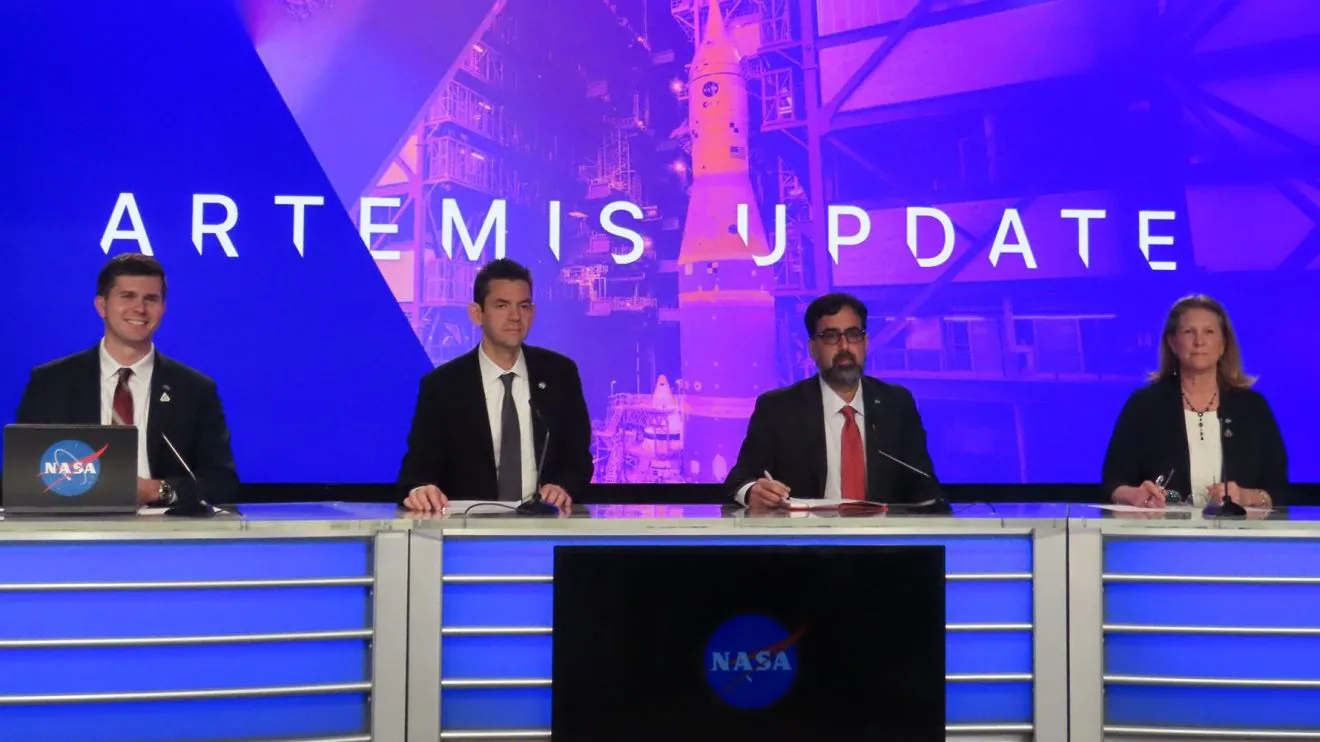
NASA officials provide an update on the Artemis campaign during a televised press briefing. Seated from left to right are: George Alderman (NASA Deputy Press Secretary), Jared Isaacman (NASA administrator), Amit Kshatriya (NASA Associate Administrator), and Dr. Lori Glaze (NASA Moon to Mars Program Manager).
The Rationale Behind the Realignment
The restructuring of Artemis III is a direct response to a thorough risk assessment and severe hardware bottlenecks, primarily the readiness timelines for the SpaceX Human Landing System (HLS).
The development of Starship has been fraught with challenges. While designed to launch 100 to 150 metric tons to Low-Earth Orbit, tests with the Block 2 prototypes have been limited to roughly 35 metric tons. Because a single lunar Starship requires massive amounts of propellant, SpaceX would need to launch anywhere from 10 to 15 refueling "tankers" (or 5 to 8 partially fueled tankers) just to execute one Moon landing.
With five out of eleven prototypes lost to engine failures and fuel leaks, and the Block 3 test flight not scheduled until April 7, 2026, an in-orbit refueling demonstration in the near term became highly improbable. Meanwhile, Blue Origin has been making steady strides with its New Glenn orbital launch vehicle, successfully deploying payloads to Medium-Earth Orbit and the L2 Lagrange point in its first two flights and giving NASA a viable alternative, but one that still requires time to mature.
NASA Associate Administrator Amit Kshatriya framed the restructuring as a necessary stabilization. "There is too much learning left on the table and too much development and production risk in front of us," Kshatriya explained. "The entire sequence of Artemis flights needs to represent a step-by-step build-up of capability... but not so big that we take unnecessary risk given previous learnings."
The Political Backdrop: Budget Cuts and "Project Athena"
Beyond hardware delays, the Artemis restructuring is deeply entangled in recent political and financial turmoil at NASA. The agency is currently navigating a severe 25% reduction in overall funding for FY 2026, leading to the loss of over 4,000 employees and placing dozens of scientific missions (including Mars Odyssey and MAVEN) in jeopardy.
Much of this strategic pivot appears to be Administrator Isaacman's effort to stabilize the agency following a chaotic tenure by former acting-Administrator Sean Duffy. Late last year, the leaked "Project Athena" document, which Isaacman claims was leaked by Duffy to scapegoat him, proposed devastating cancellations to the SLS, Orion, and Lunar Gateway programs.
By introducing this new, pragmatic Artemis roadmap and issuing directives to "rebuild core competencies in the civil servant workforce," Isaacman is actively attempting to reverse the drastic cutbacks proposed under his predecessor and restore confidence in NASA's long-term vision.
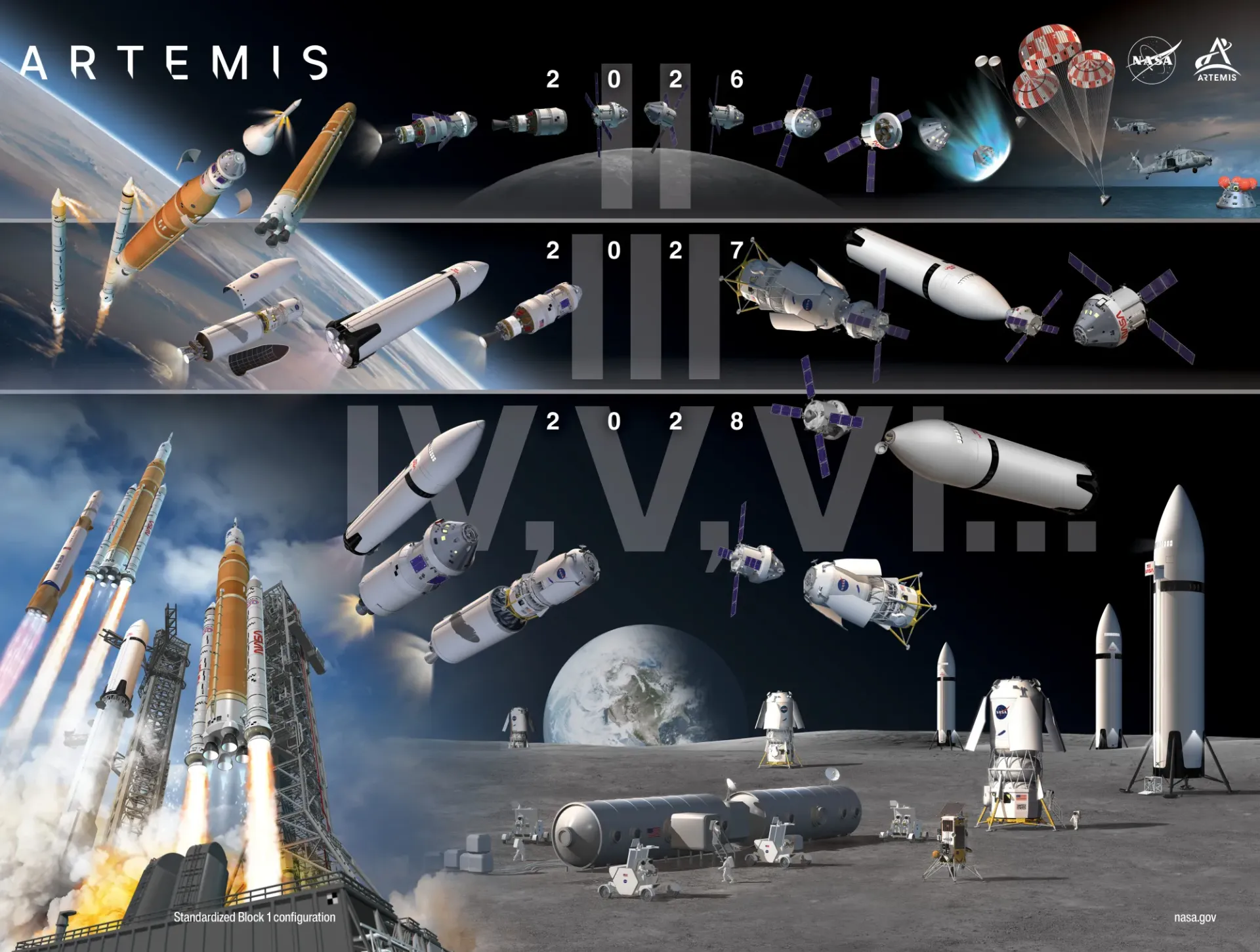
A graphic illustrating NASA’s increased cadence of Artemis missions. NASA
The New Path Forward
By reassigning the most complex elements of the program away from Artemis III, NASA has established a more sustainable, phased roadmap to the lunar surface.
- Artemis II (April 2026): A crewed lunar flyby to validate Orion's life support systems.
- Artemis III (Mid-2027): A crewed Low-Earth Orbit docking and systems test with commercial landers.
- Artemis IV (Early 2028): The new target for the first crewed lunar landing of the Artemis program.
- Artemis V (Late 2028): A potential second lunar landing to build operational momentum.
To make this rapid 2028 cadence achievable, NASA must address its launch frequency.
"Standardizing vehicle configuration and increasing flight rate... is how we achieved the near-impossible in 1969, and it is how we will do it again," Isaacman asserted.
Consequently, NASA has scrapped complex plans to continuously evolve and upgrade the SLS rocket. Previously, NASA intended to transition from the current "Block 1" design to a larger "Block 1B" configuration featuring a massive Exploration Upper Stage (EUS). Instead, the agency will rely exclusively on the Block 1 configuration (utilizing the Interim Cryogenic Propulsion Stage, or ICPS) for landing missions. By treating the rocket as a standardized launch vehicle, the revised goal is to reduce the launch cadence down to once every 10 months.
Geopolitical Realities and Measured Progress
A significant external factor in the new space race is China, which is actively targeting a crewed lunar landing by 2030 to build its International Lunar Research Station (ILRS). This threat is materializing rapidly; less than two weeks ago, China's Long March-10 super-heavy launch system and its next-generation Mengzhou spacecraft passed a critical launch test, paving the way for their Lanyue lunar lander.
Administrator Isaacman acknowledged this geopolitical pressure but stressed that rushing complex engineering is counterproductive. NASA’s overhaul signals a mature organizational realization: risking a crew due to untested technology, or allowing years to lapse between flights and losing operational "muscle memory" among ground teams, would be a far more detrimental setback to American aerospace leadership than adjusting the landing schedule by a year.
For now, the focus returns to the Vehicle Assembly Building in Florida. As the four astronauts of Artemis II await the completion of vehicle repairs, they remain the vanguard for a newly pragmatic, yet highly determined, era of space exploration.
Sources:
- NASA Press Briefing (February 27, 2026): NASA Leadership Announces Update to Artemis Campaign. Quotes from Administrator Jared Isaacman and Associate Administrator Amit Kshatriya regarding the shift of Artemis III to a LEO test flight and the target cadence.
- Universe Today (February 28, 2026): NASA Updates Artemis Program, Adding a Mission and Delaying Lunar Landing. Analysis of SpaceX Starship payload limitations, Blue Origin's progress, the cancellation of the Block 1B SLS upgrade, and the political context surrounding the "Project Athena" leak and FY 2026 budget cuts.
- NASA Aerospace Safety Advisory Panel (ASAP): Annual Report on Artemis Program Readiness (Early 2026). Findings indicating that the original Artemis III profile relied on "too many firsts" occurring simultaneously.
- Space.com (February 25, 2026): Artemis 2 rolls back to the VAB after helium leak aborts March launch. Details on the ICPS helium flow interruption and the 4-mile rollback of the SLS rocket to the Vehicle Assembly Building.
- NASA Blog / Artemis Updates: Artemis II Wet Dress Rehearsal and Fueling Milestones. Context on the initial hydrogen leak delays from early 2026.